Segment Deep Dives
Actuators & Precision Reducers: Market Size and Players
0135–40% of a robot's cost
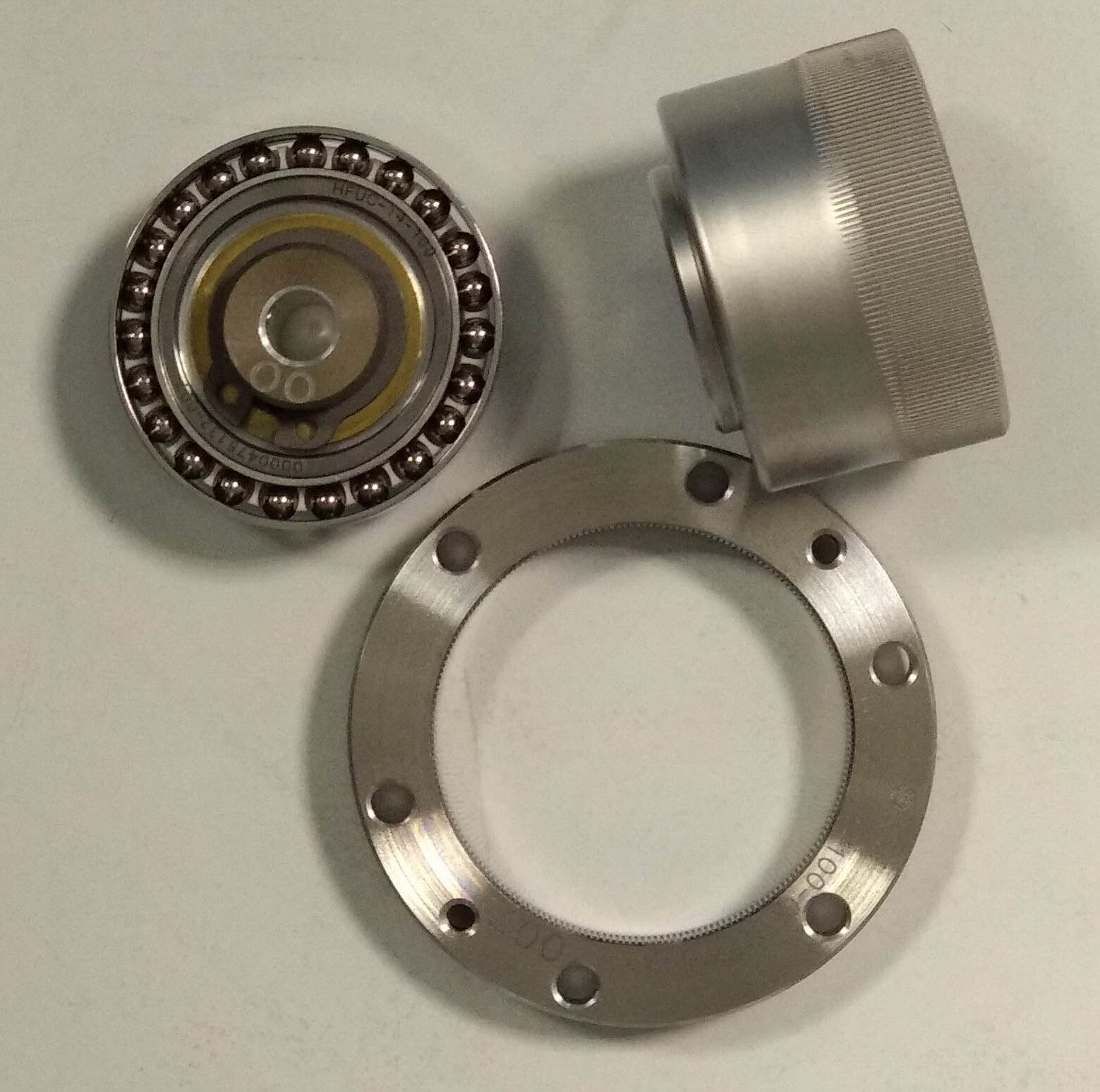
The three components of a strain wave gear set — wave generator, flexspline, and circular spline — the reducer type inside most humanoid and industrial-arm joints.
Photo: Pieceofmetalwork, CC BY-SA 4.0, via Wikimedia CommonsActuators and the precision reducers (gearboxes) inside them convert a motor's spin into the precise, controllable joint movement a robot arm or humanoid limb needs — and by most industry estimates, they account for roughly 35-40% of a humanoid robot's total bill of materials, more than any other single component category. High-precision, high-torque actuators suitable for humanoid-grade joints are made by fewer than ten suppliers globally, a genuine bottleneck that shapes how fast any humanoid maker can actually scale production, independent of how good its AI software is.
02Precision reducers
Two related but distinct reducer technologies sit inside almost every robot joint built since the 1980s, and Japanese suppliers have led in both since roughly that decade — the same era covered in this site's history of the wider robot-arm industry. Nabtesco leads in RV (cycloidal) reducers, the technology of choice for the large joints in industrial-robot arms, with an estimated 60% share of global supply. Harmonic Drive Systems and Sumitomo Drive Technologies lead in harmonic (strain-wave) reducers, more common in smaller arms, collaborative robots, and humanoid joints, with estimated shares of roughly 15% and 19% respectively of that narrower category. None of the three compete head-on for the same reducer type — each has quietly held its own lane for decades.
Who supplies the reducers
~19% Industry trade estimate — harmonic reducers for robotics specifically
| Company | Country | Metric | Share |
|---|---|---|---|
| Nabtesco | JP | Reducer supply share (2025) | ~60% Industry trade estimate — RV reducers specifically, not harmonic reducers |
| Sumitomo Drive Technologies | JP | Reducer supply share (2025) | ~19% Industry trade estimate — harmonic reducers for robotics specifically |
| Harmonic Drive Systems | JP | Reducer supply share (2025) | ~15% Industry trade estimate — harmonic reducers specifically |
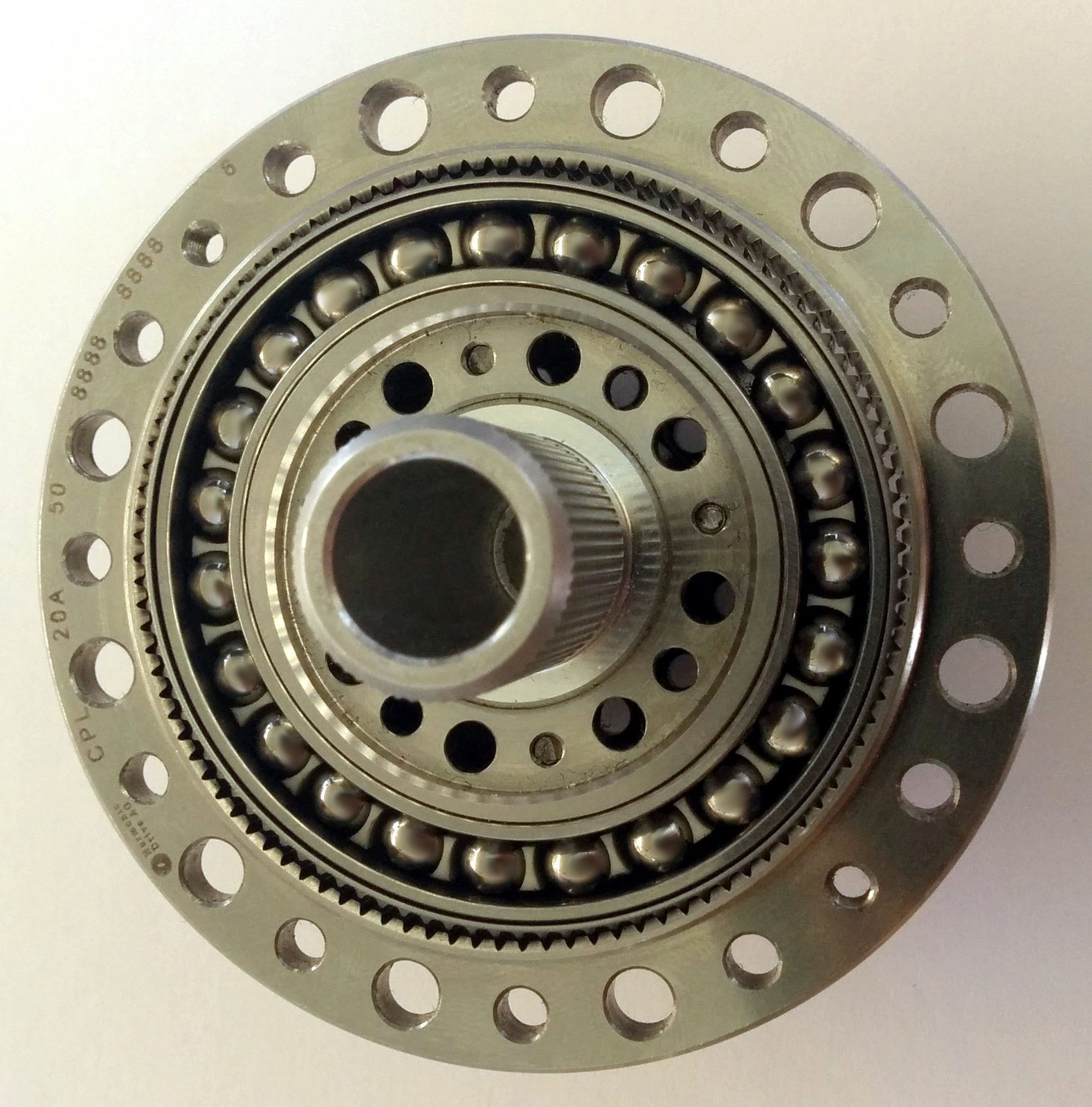
A complete harmonic drive gearbox unit in cross-section, the type of precision reducer Nabtesco and Harmonic Drive Systems dominate global supply of.
Photo: wdwd, CC BY-SA 4.0, via Wikimedia Commons03Market size
DataIntelo estimates the global harmonic drive system market at $2.8 billion in 2025, growing to $6.1 billion by 2034 — a 9.1% compound annual growth rate. That figure covers harmonic drive systems specifically, not the actuator/component segment as a whole; no research firm was found publishing a consistent market-size series across every reducer type, motor, and actuator category combined, which is itself a sign of how fragmented and specialized this segment's supplier base is compared to, say, the humanoid or drone segments covered elsewhere.
Global harmonic drive system market size, DataIntelo estimate (USD)
Data note: These three companies aren't competing head-to-head on a single share metric — they lead in two different precision-reducer technologies. Nabtesco's ~60% figure is for RV (cycloidal) reducers, the technology of choice for large industrial-robot-arm joints; Sumitomo's ~19% and Harmonic Drive Systems' ~15% are both for harmonic (strain-wave) reducers, more common in smaller arms, cobots, and humanoid joints. These figures use different denominators (RV-reducer supply vs. harmonic-reducer supply specifically) and shouldn't be summed into one combined market-share number. Market-size figures here cover harmonic drive systems specifically, not the actuator/component segment as a whole (which also includes motors, gearboxes for other reducer types, and sensors covered in the separate Sensor & Perception segment) — no single research firm was found publishing a consistent market-size series for the full segment.
Market data as of 2026-07
04In-house actuators
The humanoid funding boom has put pressure on this decades-old supplier structure from a new direction. Rather than buying reducers and actuators from Nabtesco, Harmonic Drive Systems, or Sumitomo the way industrial-arm makers have for decades, several humanoid makers — Tesla, Unitree, and others — have moved to design and build their own actuators in-house, treating joint-level hardware as a core competency rather than a bought-in component, the same vertical-integration logic Unitree already applied to its quadruped robots. Whether that in-house approach actually beats buying from the established Japanese suppliers on cost and reliability at scale, or whether it's a temporary workaround for a supply base that can't yet meet humanoid-scale volume, is one of this segment's open questions.
05Challenges ahead
For four decades, this segment looked structurally similar to the robotic-arm segment it feeds: a small, stable group of specialist suppliers with deep technical moats that newcomers rarely challenged. The humanoid boom is the first real test of that structure in a generation — both because of the sheer new demand it's creating, and because some of its biggest buyers are trying to become suppliers to themselves instead. Whether Nabtesco, Harmonic Drive Systems, and Sumitomo keep their lanes through this cycle the way they did through the industrial-robot and cobot eras, or whether in-house actuator programs at Tesla, Unitree, and others carve out a real share, is the question the next few years of this narrow but critical segment will answer.
06Timeline at a glance
| Year | Region | Event |
|---|---|---|
| 1980s | JP | Nabtesco and Harmonic Drive Systems establish leadership in precision reducers |
| 2000s | JP | Sumitomo Drive Technologies builds a significant harmonic-reducer position |
| 2020s | Global | Humanoid makers (Tesla, Unitree, and others) begin building actuators in-house |
07FAQ
How much of a robot's cost is actuators?
By most industry estimates, actuators and their reducers account for roughly 35-40% of a humanoid robot's total bill of materials — more than any other single component category.
Who makes the precision reducers inside robot joints?
Three Japanese companies lead, each in a different reducer technology: Nabtesco in RV (cycloidal) reducers (~60% of that category's global supply), and Sumitomo Drive Technologies (~19%) and Harmonic Drive Systems (~15%) in harmonic (strain-wave) reducers.
Why are humanoid makers building their own actuators?
Fewer than ten suppliers worldwide make actuators precise and powerful enough for humanoid-grade joints, which can bottleneck production. Tesla, Unitree, and others have chosen to design and build actuators in-house rather than depend entirely on that limited external supply base — the same vertical-integration approach Unitree already used for its quadruped robots.
Related articles
Segment Deep Dives
All Segment Deep Dives articles →Humanoid & Mobility
Industrial & Field Applications
Enabling Technology
- ›Robot Foundation Models: Market Size, Players, and the Funding Boom
- ›Actuators & Precision Reducers: Market Size and Players(this article)
- ›Sensors & Perception for Robots: Market Size and the LiDAR Race
- ›AI Compute & Chips for Robots: Market Size and Players