Segment Deep Dives
Sensors & Perception for Robots: Market Size and the LiDAR Race
01The perception layer
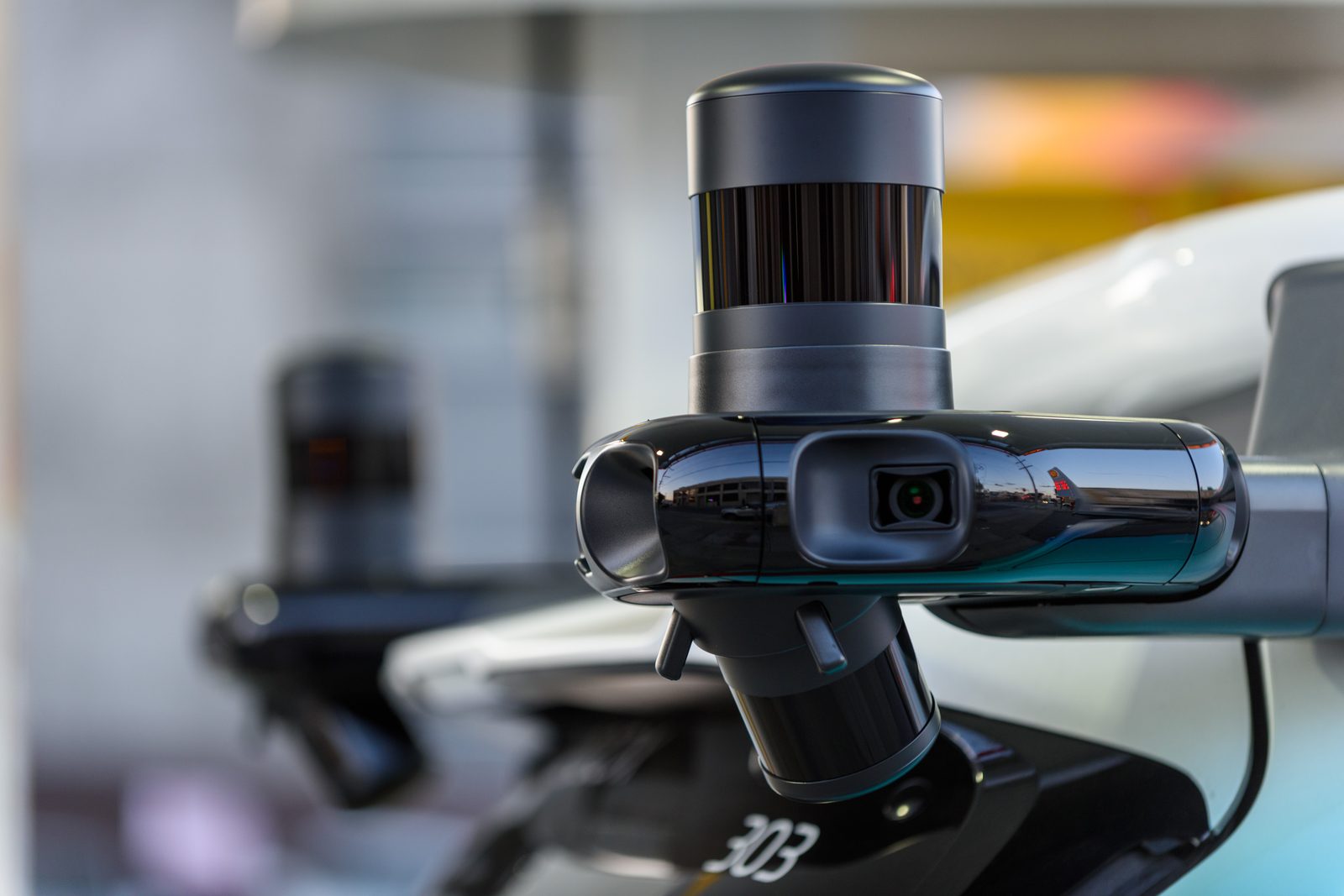
A roof-mounted LiDAR and camera sensor pod on a Zoox autonomous test vehicle — the same class of perception hardware, drawn from the automotive industry, that robotics makers like Hesai and RoboSense now also supply.
Photo: 9yz, CC BY 4.0, via Wikimedia CommonsPerception hardware splits into two very different jobs. "Seeing" — mapping the environment, detecting obstacles, localizing the robot in space — is dominated by LiDAR (light detection and ranging) and cameras, and it's the more mature, better-funded half of this segment, having spent the past decade being built out for the self-driving car industry before robotics ever needed it. "Feeling" — sensing grip force, contact, and slip through a robot's hands and feet — is the newer, smaller half, and it's being built specifically for humanoid robots rather than inherited from an adjacent industry, since no other market previously needed a five-fingered hand to sense the world through touch.
02LiDAR's pivot to robots
Modern spinning LiDAR traces back to 2005, when Velodyne's David Hall built a 64-laser sensor for the DARPA Grand Challenge autonomous-vehicle competition — the technology that made point-cloud 3D mapping practical for the first time. Hesai and RoboSense (originally Suteng Innovation Technology), both founded in 2014, built their businesses on the autonomous-vehicle LiDAR boom that followed, competing for years primarily on cost-per-unit for self-driving car and ADAS customers. Hesai listed on Nasdaq in February 2023; RoboSense listed on the Hong Kong Stock Exchange in January 2024. Velodyne itself, the pioneer of the category, merged with Ouster in early 2023 rather than surviving as a standalone automotive-LiDAR pure play — a sign of how brutal the price competition in that original market had become. As humanoid and quadruped robots emerged as a new, higher-margin customer base from around 2024 onward, both Hesai and RoboSense pivoted a meaningful share of their product roadmaps toward robotics-specific LiDAR, rather than treating it as a side business to automotive.
03LiDAR market size
MarketsandMarkets estimates the global LiDAR market (all applications — automotive, robotics, geospatial, and industrial combined) at $3.27 billion in 2025, growing to $12.79 billion by 2030, a 31.3% compound annual growth rate. That figure spans far more than robotics; no research firm was found publishing a market-size series isolating robotics-specific LiDAR revenue on its own, which is why the shipment-volume and market-share figures below — both robotics-specific — are the more directly relevant numbers for this segment.
Global LiDAR market size, all applications, MarketsandMarkets estimate (USD)
Hesai robotics LiDAR shipments, humanoid and quadruped robots (units)
Data note: Hesai and RoboSense both publicly claim the #1 spot in robotics LiDAR, but their claims use different category scopes and aren't directly comparable. Hesai's figure (239,273 units, +425.8% YoY) is specifically for humanoid and quadruped robots. RoboSense's figure (303,000 units) spans a broader category — humanoid robots, robotic mowers, and unmanned delivery vehicles — and RoboSense separately reports partnerships with roughly 50 humanoid/quadruped makers including Unitree, AgiBot, Galbot, ENGINEAI, and Dobot. Both figures come from the companies' own disclosures (Hesai's SEC filing, RoboSense's press release), not an independent third-party count, and shouldn't be summed. Market-size figures here cover LiDAR specifically, not the full sensor/perception stack — cameras, IMUs, and tactile/force-torque sensors (a separate, smaller sub-market covered in article prose) aren't included, since no single research firm was found publishing a consistent market-size series spanning all of them.
Market data as of 2026-07
04Key players
Hesai and RoboSense each publicly claim to be the top supplier of robotics LiDAR, and both claims are backed by real, if not directly comparable, numbers. Hesai reported 239,273 robotics LiDAR units shipped in 2025 for humanoid and quadruped robots specifically, up 425.8% from 45,503 units in 2024. RoboSense reported 303,000 robotics LiDAR units shipped in 2025 across a broader category spanning humanoid robots, robotic lawn mowers, and unmanned delivery vehicles, up 1,142% year-over-year, and separately disclosed partnerships with roughly 50 humanoid and quadruped makers including Unitree, AgiBot, Galbot, ENGINEAI, and Dobot. Because the two companies count different categories of robot, their figures shouldn't be summed or read as a settled ranking — RoboSense's total is larger, but Hesai's is the narrower, humanoid-and-quadruped-specific number. RoboSense's momentum continued into early 2026: the company reported 330,300 total LiDAR units shipped in the first quarter, with robotics exceeding 50% of its total shipments for the first time.
| Company | Country | Metric | Units |
|---|---|---|---|
| RoboSense | CN | Robotics LiDAR units (2025) | 303,000 RoboSense press release — robotics LiDAR shipments across humanoid robots, robotic mowers, and unmanned delivery vehicles |
| Hesai | CN | Robotics LiDAR units (2025) | 239,273 Hesai Group, SEC Form 6-K filing — LiDAR shipments for humanoid and quadruped robots specifically |
The two claims, side by side
Humanoid and quadruped robots specifically. +425.8% YoY.
RoboSense: 303,000 units
Humanoid robots, robotic mowers, and unmanned delivery vehicles combined. +1,142% YoY.
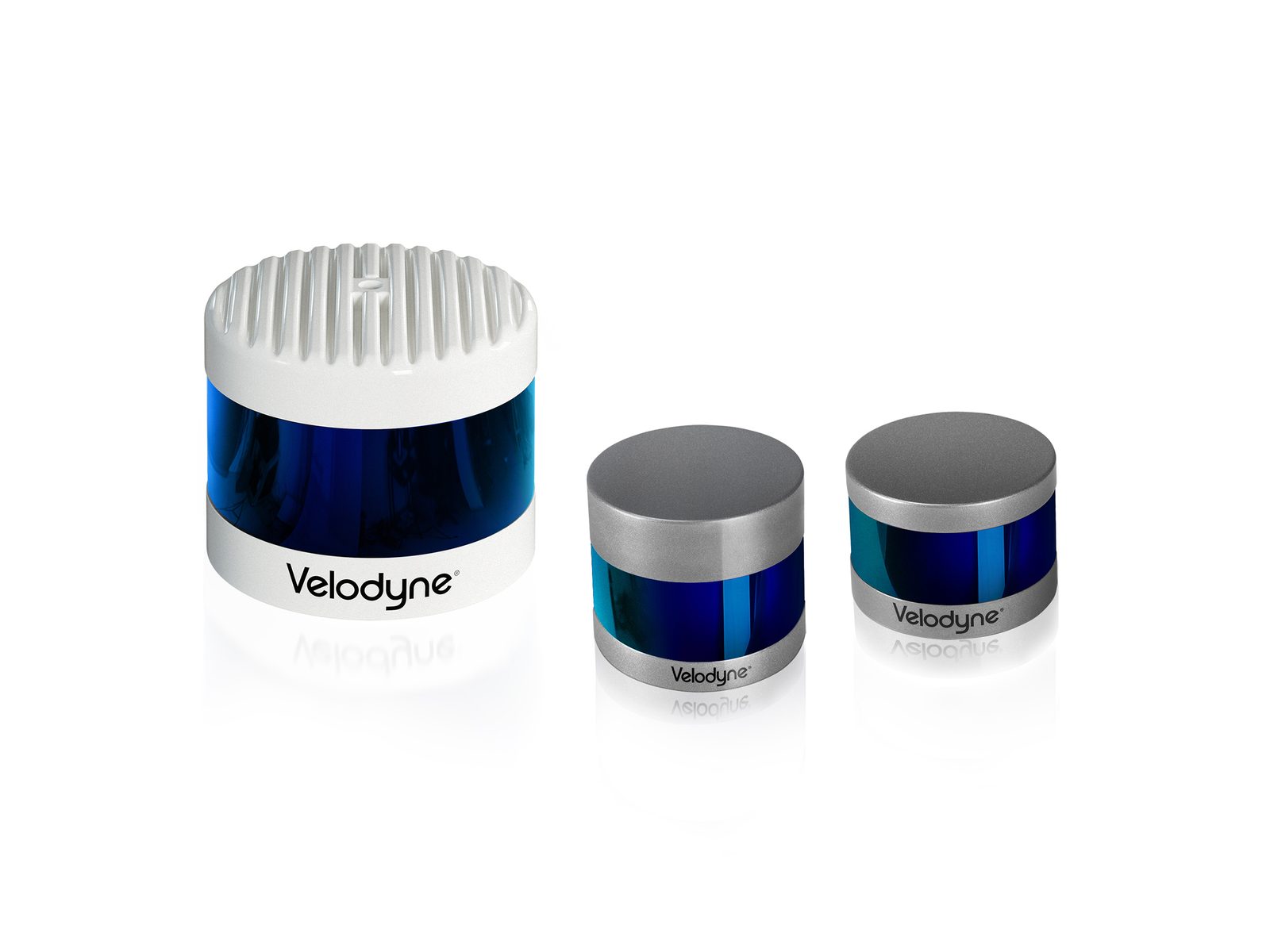
Velodyne's Alpha Prime and Ultra Puck LiDAR family — spinning mechanical LiDAR units representative of the hardware category Hesai and RoboSense now lead in robotics-specific shipments.
Photo: APJarvis, CC BY-SA 4.0, via Wikimedia Commons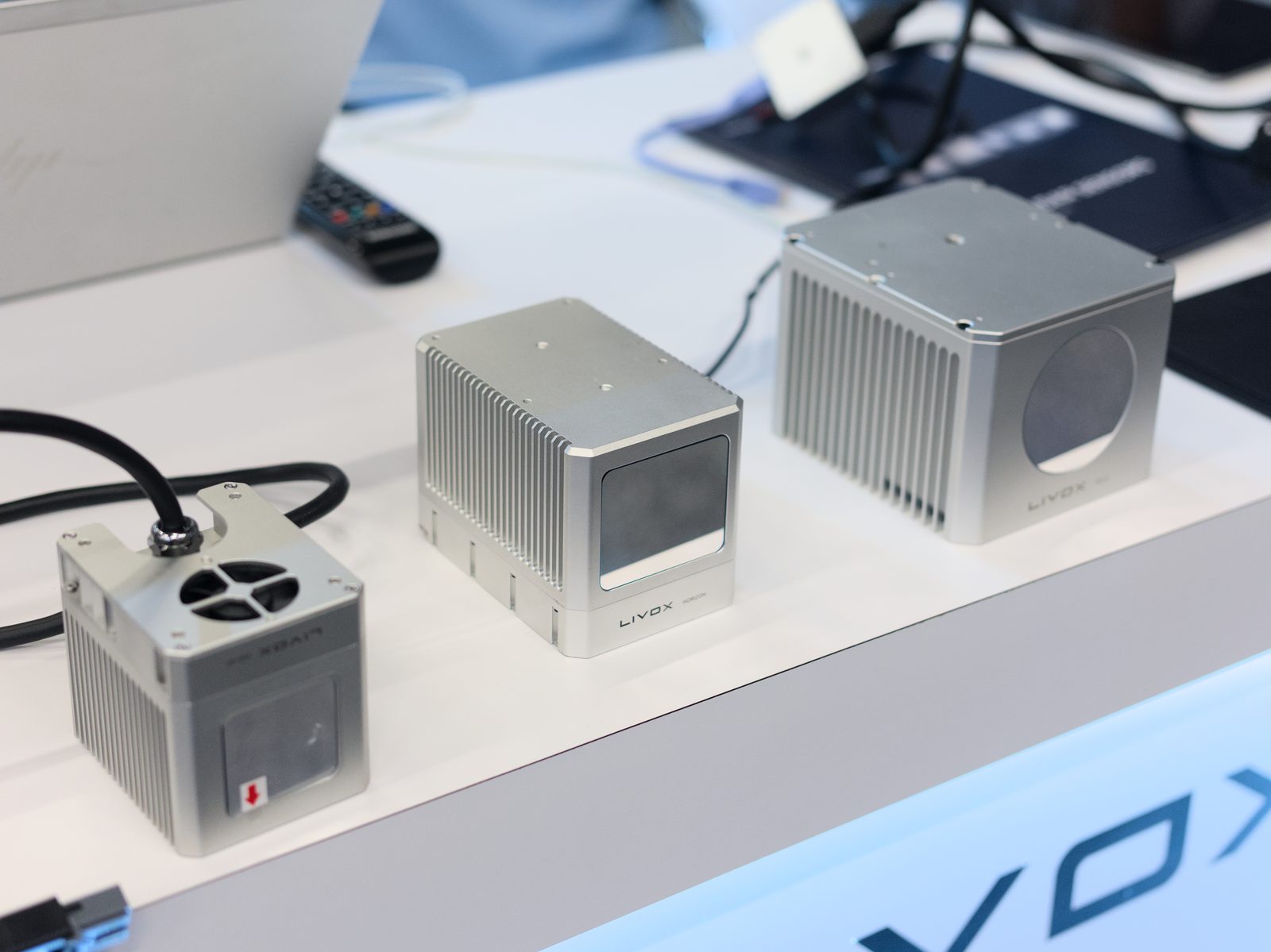
Livox's Mid-40, Horizon, and Tele-15 solid-state LiDAR units — the cheaper, no-moving-parts design increasingly favored over spinning mechanical LiDAR for robotics applications.
Photo: Dllu, CC BY-SA 4.0, via Wikimedia Commons05Tactile sensing
Alongside LiDAR and cameras, humanoid robots need a sense their industrial-robot-arm predecessors mostly didn't: touch. A humanoid hand has to modulate grip force on an egg versus a wrench, and detect when an object is starting to slip, which requires tactile sensors across the fingertips and palm plus force-torque sensors at the wrist. Industry market-research estimates for these sub-markets are thinner and less independently verified than the LiDAR figures above, so they're worth reading as directional. One specialty market-research estimate sizes the humanoid-robot torque-sensor market at $515 million in 2024, growing to a projected $1.28 billion in 2025 and $7.87 billion by 2032 (a ~41% compound annual growth rate over that 2024–2032 span) — a much steeper curve than the roughly $168 million to $185 million to $361 million trajectory estimated for the humanoid-robot tactile-sensor market over the same years, reflecting how much earlier-stage tactile sensing still is relative to force-torque sensing.
The supplier base looks nothing like LiDAR's China-concentrated field. ATI Industrial Automation and FUTEK, both US-based, are established force-torque sensor makers extending into humanoid wrists from an industrial-automation base. Switzerland's Bota Systems has built specifically ROS2-calibrated force-torque sensors aimed at the cobot and humanoid wrist market. On the tactile side, Pressure Profile Systems (US) is an established resistive-tactile-sensing supplier, while Sensor Products Inc. (US) and Aodiwei (China) compete on lower-cost capacitive tactile sensors. In August 2025, China's XJCSENSOR unveiled a MEMS-based force-torque sensor at the World Robot Conference in Beijing — one signal that Chinese suppliers are starting to contest a category so far led by US and European specialists.
Humanoid tactile & force-torque sensor market, one estimate (USD)
Who's building touch
ATI Industrial Automation & FUTEK
Established industrial force-torque sensor makers extending into humanoid wrists.
Bota Systems
ROS2-calibrated force-torque sensors purpose-built for cobot and humanoid wrists.
PPS, Sensor Products Inc. & Aodiwei
Resistive and lower-cost capacitive tactile sensors for fingertips and palms.
06Challenges ahead
On the LiDAR side, the open question is whether Hesai and RoboSense's rival claims converge into one consistent ranking as robotics becomes a larger share of both companies' revenue and reporting gets more standardized, or whether they keep drawing category boundaries that suit their own strongest number — a pattern this site has already seen in humanoid shipment counts and drone-market share. On the tactile side, the question is more basic: whether any single sensing technology (capacitive, resistive, or another approach) becomes a default the way LiDAR did for 3D mapping, or whether humanoid hands keep shipping with a patchwork of sensor types from different suppliers, the way the segment looks today.
07Timeline at a glance
| Year | Region | Event |
|---|---|---|
| 2005 | US | Velodyne's David Hall builds a 64-laser spinning LiDAR for the DARPA Grand Challenge |
| 2014 | CN | Hesai and RoboSense (as Suteng Innovation Technology) both founded |
| 2023-02 | US | Hesai lists on Nasdaq |
| 2023 | US | Velodyne merges with Ouster rather than surviving as a standalone automotive-LiDAR company |
| 2024-01 | CN | RoboSense lists on the Hong Kong Stock Exchange |
| 2025-08 | CN | XJCSENSOR unveils a MEMS force-torque sensor at the World Robot Conference in Beijing |
| 2025 | CN | Hesai reports 239,273 humanoid/quadruped LiDAR units shipped (+425.8% YoY); RoboSense reports 303,000 robotics LiDAR units shipped (+1,142% YoY) |
| 2026 Q1 | CN | RoboSense reports robotics exceeded 50% of its total LiDAR shipments for the first time |
08FAQ
How big is the LiDAR market?
MarketsandMarkets estimates the global LiDAR market (all applications, not just robotics) at $3.27 billion in 2025, growing to $12.79 billion by 2030 — a 31.3% compound annual growth rate.
Who's the #1 supplier of robotics LiDAR, Hesai or RoboSense?
Both companies claim the #1 spot, using different category definitions. Hesai's 239,273-unit 2025 figure is specifically for humanoid and quadruped robots; RoboSense's larger 303,000-unit figure spans humanoid robots, robotic mowers, and unmanned delivery vehicles combined. The two numbers aren't directly comparable.
What sensors give humanoid robots a sense of touch?
Tactile sensors (resistive or capacitive) across the fingertips and palm detect contact and slip, while force-torque sensors at the wrist measure grip force. Estimated market sizes are much smaller than LiDAR's but growing faster — one specialty estimate puts the humanoid torque-sensor market at $515 million in 2024, projected to reach $7.87 billion by 2032.
Related articles
Segment Deep Dives
All Segment Deep Dives articles →Humanoid & Mobility
Industrial & Field Applications
Enabling Technology
- ›Robot Foundation Models: Market Size, Players, and the Funding Boom
- ›Actuators & Precision Reducers: Market Size and Players
- ›Sensors & Perception for Robots: Market Size and the LiDAR Race(this article)
- ›AI Compute & Chips for Robots: Market Size and Players