Segment Deep Dives
Drone Market: Size and the DJI Question
01DJI's decade of dominance
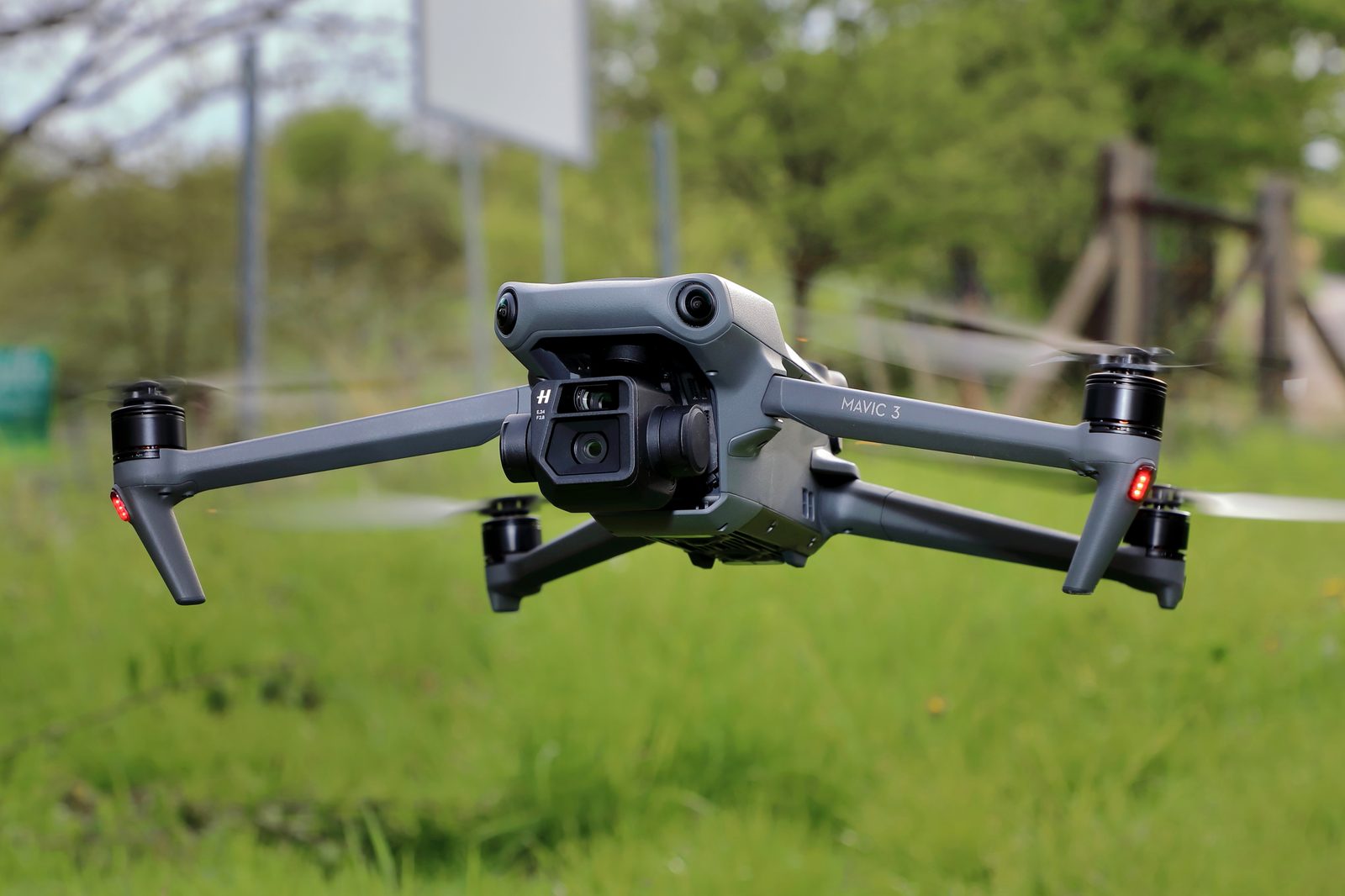
A DJI Mavic 3 in flight — the vertically integrated consumer/prosumer product line behind DJI's roughly 70% global civilian market share in 2025.
Photo: C.Stadler/Bwag, CC BY-SA 4.0, via Wikimedia CommonsDJI's rise traces back to 2006, when Frank Wang founded the company from a dorm room in Hong Kong, initially selling $6,000 flight-control components to universities and state-owned power companies for use in custom-built drones. The turning point came in 2013 with the original Phantom — the first "plug and fly" consumer drone, eliminating the technical assembly and calibration that had kept aerial photography a hobbyist niche. DJI followed with a decade of rapid, vertically integrated iteration — cameras, gimbals, flight controllers, and batteries all built in-house — that let it undercut Western and other Chinese competitors on price while staying ahead on capability. The result: DJI's global share of the civilian drone market stood at roughly 70% in 2025, down slightly from about 74% in 2024, but still larger than every other manufacturer combined by a wide margin — a lead no competitor, in over a decade of trying, has meaningfully closed.
| Company | Country | Metric | Share |
|---|---|---|---|
| DJI | CN | Unit share (2025) | ~70% The Drone Girl (Nov 2025), citing market-research estimates — down from ~74% in 2024 |
DJI's own launch video for the Mavic 4 Pro, illustrating the vertically integrated hardware (camera, gimbal, flight controller, battery, all built in-house) behind its price and capability lead.
02The US locks DJI out
Market dominance and regulatory approval turned out to be two different problems. The 2025 National Defense Authorization Act mandated a national-security review of DJI and other foreign drone makers, and on December 23, 2025, the FCC added DJI to its Covered List — effectively barring new DJI drone models from entering the US market on national-security grounds. Existing DJI drones remain legal to own and fly, and FAA research analyzing Remote ID telemetry through the ban found DJI still accounted for roughly 96% of detected drone platforms in US airspace afterward, simply because its installed base is so large that a sales ban doesn't ground it. Remote ID is the identifier most US drones are required to broadcast in flight, which is what makes a census of what's actually airborne possible at all. That 96% describes the mix of aircraft flying over the US, not a share of sales, so it isn't directly comparable to the roughly 70% global sales figure above. Skydio, the most prominent US drone maker and the company that lobbied hardest for the restrictions, accounted for just over 1% of detected US platforms in the same data, underscoring how far a regulatory win is from an actual market win.
US airspace, post-ban (FAA Remote ID detections)
03Market size and shipments
Grand View Research estimates the global drone market (all categories combined) at $83.8 billion in 2025, growing to $96.4 billion in 2026 and $182.4 billion by 2033. Unit shipments — consumer, prosumer, and commercial drones combined, per Next Move Strategy Consulting — reached roughly 8.6 million in 2024 and are projected at 10.7 million for 2025. Neither figure isolates the commercial/enterprise segment, which other research firms size at a fraction of that total — a reminder that "the drone market" spans everything from toy quadcopters to enterprise mapping platforms.
Japan's numbers show how much the definition matters. The Impress Research Institute sizes the domestic drone business at ¥497.3 billion for fiscal 2025, up 13.8% year on year, and projects ¥954.4 billion by fiscal 2030 at a 13.9% annual rate. But only ¥122.7 billion of that 2025 figure is aircraft. The rest is operational services — inspection, civil engineering and construction, agriculture — at ¥271.1 billion, plus supporting services like drone ports, data cloud, batteries, maintenance, and insurance at ¥103.6 billion. Line that up against a global "drone market" total and the two are not counting the same thing.
Global drone market size, Grand View Research estimate (USD)
Global drone unit shipments, all categories (units)
Data note: This array intentionally holds only DJI's global civilian drone unit-sales share (70%). Skydio's ~1% figure, reported elsewhere in this article, measures a different metric entirely — its share of drone platforms actually detected in US airspace via FAA Remote ID telemetry (a proxy for active use, not sales) — and isn't included here, per this file's own policy of keeping detection/usage-based metrics out of `marketShare` rather than mislabeling them as a unit-sales share. By that same US-detection metric, DJI itself accounts for roughly 96% of detected US platforms — far higher than its global sales share — because DJI's large existing installed base keeps flying even as its ability to sell new units into the US has been curtailed (the US added DJI to the FCC's Covered List in December 2025, effectively barring new DJI models from the US market; existing units remain legal to own and fly). This segment's data intentionally excludes the separate military/defense drone market, which is led by different companies (Anduril, and others) under different contract-based economics rather than unit sales — see the article for that story.
Market data as of 2026-07
04The defense market
While DJI and Skydio fight over civilian airspace, a structurally different drone business has been scaling on defense contracts instead of retail sales. Anduril Industries raised $5 billion in May 2026, doubling its valuation to $61 billion in the process, on the back of $2.2 billion in 2025 revenue — up 120% from $1 billion in 2024, and projected to reach $4.3 billion in 2026. In March 2026, the US Army awarded Anduril a 10-year enterprise contract worth up to $20 billion, consolidating more than 120 separate procurement actions into one framework, and the company is building a $1 billion, 5-million-square-foot manufacturing facility in Ohio to scale production. This is a fundamentally different kind of business than DJI's: revenue concentrated in a handful of government contracts rather than millions of individual unit sales, and shaped by geopolitics — the war in Ukraine's demonstration of cheap drones as a battlefield weapon — as much as by product design.
Civilian dominance vs. defense scale, side by side
~70% of global civilian unit sales; revenue from millions of individual purchases.
$61B valuation on the back of a handful of huge government contracts, including a $20B US Army framework.
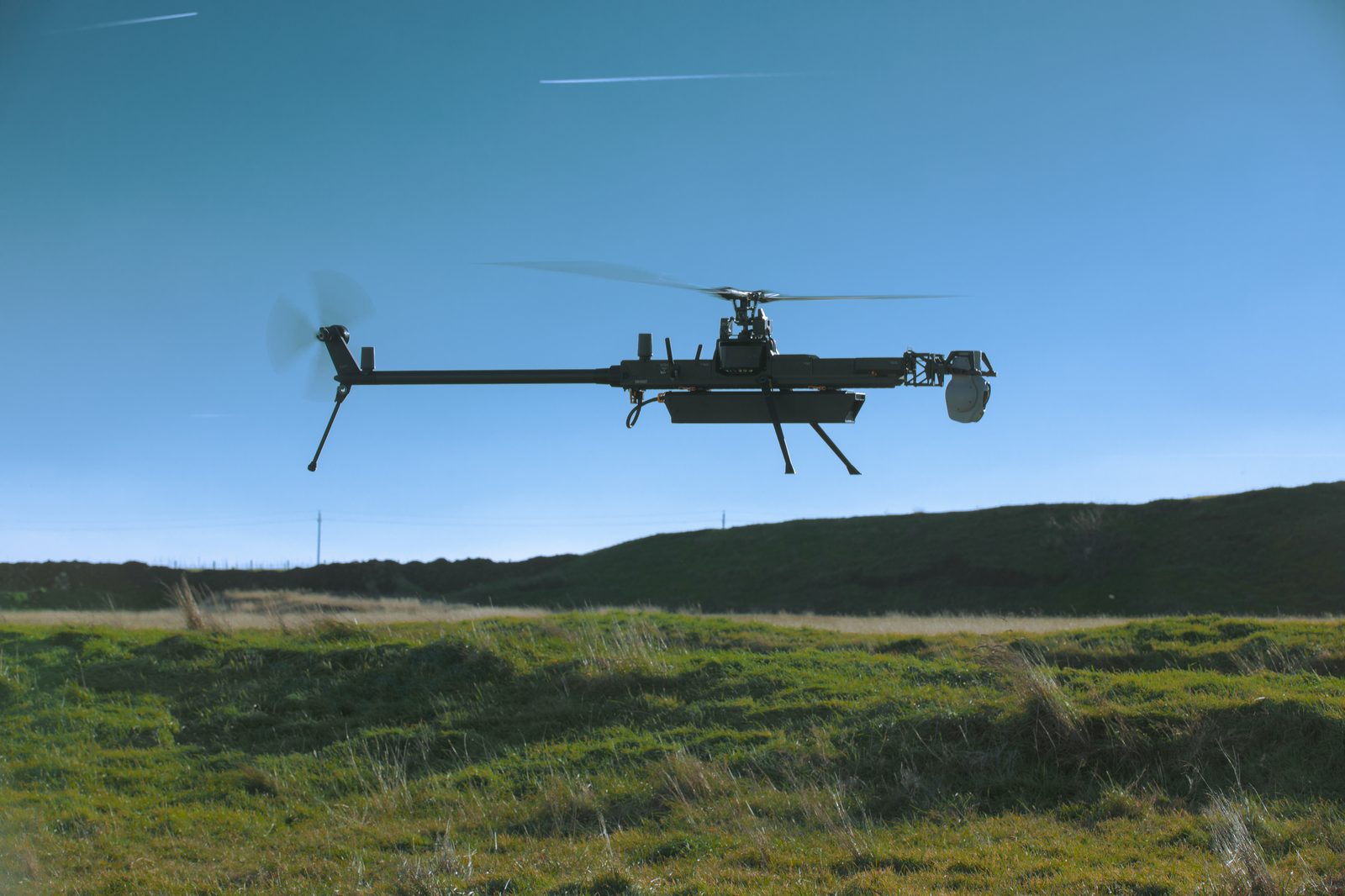
An Anduril Ghost-X UAS in flight near Mihail Kogălniceanu Air Base, Romania — the kind of US defense-sector drone platform increasingly dominating the military side of this market.
Photo: Pfc. Nathan Arellano Tlaczani / U.S. Army, Public domain, via Wikimedia Commons05Challenges ahead
For the civilian side of this segment, the open question is whether the US ban actually dents DJI's position over the years ahead, or whether — as the immediate post-ban data suggests — an entrenched installed base and a capability gap that Skydio and others haven't closed keep DJI dominant in practice even where it's restricted in law. For the defense side, the question is whether Anduril's contract-driven growth model, still young and concentrated in a handful of huge government deals, can sustain the pace investors are pricing in. The two halves of this segment are answering very different questions, on very different timelines.
06Timeline at a glance
| Year | Region | Event |
|---|---|---|
| 2006 | CN | DJI founded by Frank Wang |
| 2013 | CN | DJI launches the original Phantom, the first plug-and-fly consumer drone |
| 2017 | US | Anduril Industries founded |
| 2024 | Global | DJI's global civilian drone share estimated at ~74% |
| 2025 | US | Anduril revenue reaches $2.2B (+120% YoY) |
| 2025-12 | US | FCC adds DJI to its Covered List, barring new DJI models from the US market |
| 2026-03 | US | US Army awards Anduril a 10-year, up-to-$20B enterprise contract |
| 2026-05 | US | Anduril raises $5B, doubling its valuation to $61B |
07FAQ
How big is the drone market?
Grand View Research estimates $83.8 billion globally in 2025 (all categories), growing to $96.4 billion in 2026 and $182.4 billion by 2033.
Is DJI banned in the United States?
New DJI drone models are effectively barred from entering the US market after the FCC added DJI to its Covered List in December 2025. Existing DJI drones remain legal to own and fly, and FAA data shows DJI still accounts for roughly 96% of detected drone platforms in US airspace.
Why is Anduril's business so different from DJI's?
DJI sells millions of individual civilian drones to consumers and businesses. Anduril builds defense drones and autonomous systems sold through a small number of large government contracts — including a 10-year, up-to-$20 billion US Army framework — a fundamentally different, contract-concentrated revenue model.
08Sources
02. The US locks DJI out
03. Market size and shipments
Related articles
Articles
Company & Market Data
Segment Deep Dives
All Segment Deep Dives articles →Humanoid & Mobility
- ›Humanoid Robots: Size and Disputed Shipments
- ›Quadruped Robots: The 46x Price Gap
- ›AGV vs AMR: Market Size and Fleet Scale
- ›Drone Market: Size and the DJI Question(this article)