Company & Robot DB
The History of Figure AI
01Founding
Figure's founder, Brett Adcock, had already built two companies before humanoid robots. He co-founded the hiring marketplace Vettery in 2012–2013, which the Adecco Group acquired in February 2018 for a price reported at roughly $100–110 million depending on the source. He then co-founded electric-aircraft company Archer Aviation in October 2018, which went public via SPAC merger in February 2021 at a reported valuation of about $2.7 billion. Adcock left Archer in May 2022 and founded Figure the same month, initially based in Sunnyvale, California.
Rather than raise venture capital first, Adcock self-funded Figure's earliest work with roughly $100 million of his own money from the Vettery and Archer proceeds — he's said deep-tech hardware was a hard sell to traditional VCs at the time. The early team was recruited from Boston Dynamics, Agility Robotics, Tesla, Rivian, Apple, Google DeepMind, and Toyota Research Institute, including founding CTO Jerry Pratt, a legged-robotics researcher formerly of the Florida Institute for Human and Machine Cognition. Figure emerged from stealth on March 2, 2023, unveiling the Figure 01 prototype and describing its goal as building "the world's first commercially viable general purpose humanoid robot."

Figure founder and CEO Brett Adcock, who self-funded the company's first $100 million with proceeds from two earlier startups before raising any outside capital.
Photo: Diane Rose, CC BY-SA 4.0, via Wikimedia Commons- 2022
Self-funded founding
Adcock founds Figure with ~$100M of his own money
- 2023
Figure 01
Stealth exit, first walking demos
- 2024
Figure 02 & BMW
OpenAI deal, then BMW deployment begins
- 2025
Helix & Figure 03
In-house AI model, third-gen hardware, $39B round
- 2026
Robots outnumber staff
~740 robots vs. ~600-660 employees
02Funding
Figure's outside funding started modestly relative to where it ended up. A $70 million Series A closed in May 2023, led by Parkway Venture Capital with Adcock himself putting in $20 million, at a $500 million post-money valuation. The round that changed Figure's trajectory came nine months later: a $675 million Series B in February 2024, backed by Microsoft, the OpenAI Startup Fund, Nvidia, Jeff Bezos, Intel Capital, and Amazon among others, valuing the company at $2.6 billion and coming bundled with the OpenAI model-development partnership discussed below.
Figure's Series C, announced September 16, 2025, raised more than $1 billion at a $39 billion post-money valuation — roughly 15 times the Series B valuation in a year and a half — led again by Parkway Venture Capital with Brookfield Asset Management, Nvidia, Macquarie Capital, Salesforce, and T-Mobile Ventures participating. Figure's own release described the company as having raised "nearly $2 billion total" by that point; that figure is worth flagging against the earlier seed-stage figure of "$675 million raised" sometimes cited in press shorthand, which actually describes only the Series B round, not Figure's cumulative total. Adcock has said he retains roughly a 50% ownership stake in the company, and Figure has sent cease-and-desist letters to brokers offering to sell its shares on unauthorized secondary markets.
Funding rounds by post-money valuation
TechCrunch / PR Newswire, compiled Sep 2025
Funding rounds
Series A
$70M led by Parkway Venture Capital (Adcock himself contributed $20M), at a $500M post-money valuation.
SourceTechCrunch, May 2023
Series B
$675M from Microsoft, OpenAI Startup Fund, Nvidia, Jeff Bezos, and Intel Capital among others, at a $2.6B valuation — bundled with the (since-ended) OpenAI model partnership.
SourceCNBC, Feb 2024
Series C
More than $1B led again by Parkway Venture Capital, with Brookfield, Nvidia, Macquarie Capital, and Salesforce participating, at a $39B post-money valuation.
SourceTechCrunch, Sep 2025
03The product line
Figure's hardware has moved through three generations in under three years. Figure 01 (2023) stood 1.68m tall and weighed 60kg, walking with external gantry support in its earliest demos before Figure released dynamic, unsupported walking footage later that year. Figure 02, unveiled in August 2024, kept the same height but added a larger onboard battery (roughly 5 hours of runtime), integrated internal cabling, and six onboard cameras — this was the generation BMW put to work on its Spartanburg, South Carolina line.
Figure 03, unveiled October 9, 2025, is 9% lighter than Figure 02 at 60kg, with roughly 16 hours of battery life, palm cameras embedded in each hand, fingertip tactile sensors sensitive to forces as low as 3 grams, and wireless inductive charging. Time named it one of its Best Inventions of 2025. Figure has said it's targeting a consumer price under $20,000, positioning Figure 03 as the generation meant to eventually reach homes as well as factories — though as of this writing that home version isn't yet for sale.
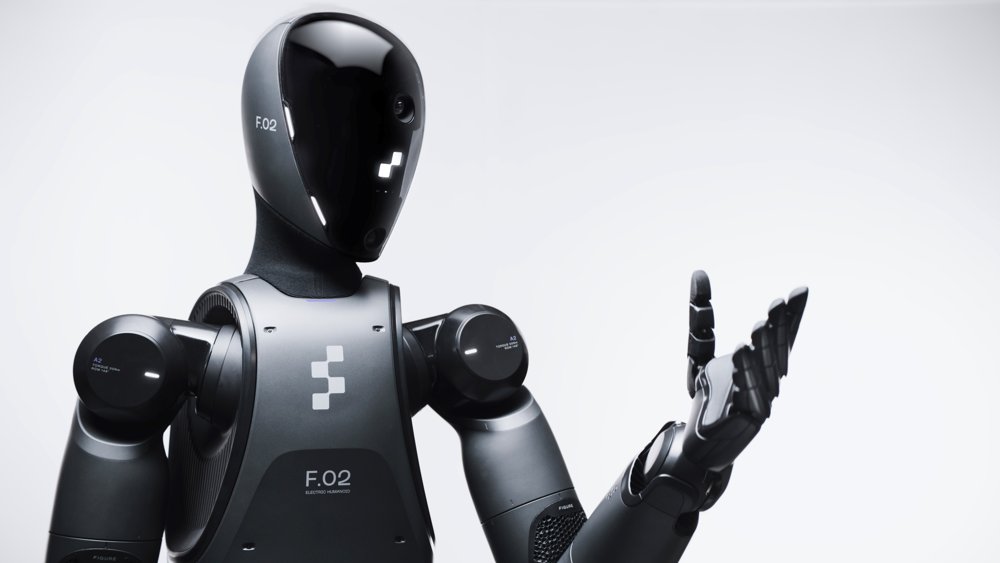
Figure 02, the generation BMW put to work in its Spartanburg, South Carolina body shop.
Photo: BMW Group (press use)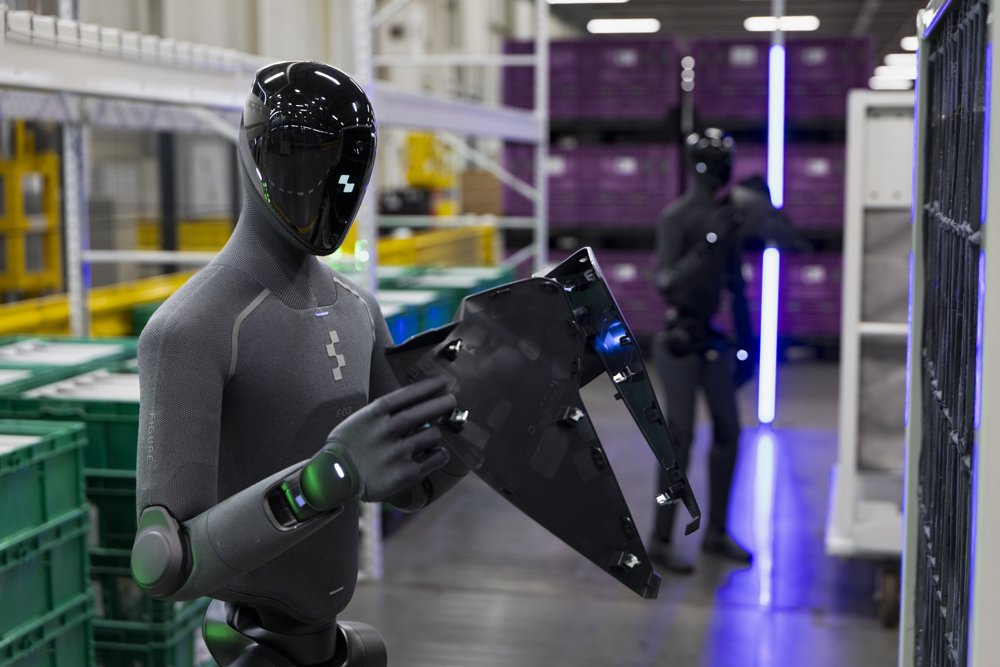
Figure 03 units on BMW's Spartanburg production floor, working the parts-sequencing role that succeeded Figure 02's body-shop pilot.
Photo: BMW Group (press use)Figure's official "Introducing Figure 03" reveal video (October 2025) — the generation discussed in section 03 below.
04Helix and the OpenAI partnership
Figure's February 2024 Series B came bundled with a model-development partnership with OpenAI, using Microsoft Azure for infrastructure. It didn't last long: by early 2025, Figure had ended the collaboration, with Adcock saying the partnership delivered "very little" value, that it was hard to get OpenAI's team into the office for demos, and that OpenAI's own ambitions to build humanoids in-house complicated the relationship. Figure announced its in-house replacement the same month — Helix, a vision-language-action model built as two networks working together: a 7-billion-parameter model for scene and language understanding paired with an 80-million-parameter fast model for continuous whole-body control. Figure says Helix was the first VLA model shown running two robots simultaneously on a shared long-horizon task involving objects neither robot had seen in training, using roughly 500 hours of training data.
Figure extended the same approach in January 2026 with Helix 02, replacing what Figure describes as 109,504 lines of hand-engineered C++ control code with a single learned network — Figure calls it "System 0" — operating directly from camera input to every actuator. Figure's demo showed a robot autonomously unloading and reloading a dishwasher across a full kitchen in a 61-action, four-minute sequence with no resets or teleoperation, which Figure describes as the longest continuous autonomous task shown by a humanoid to date.
Figure's official "Introducing Helix 02" video (January 2026) — the full-body-autonomy dishwasher demo discussed in section 04 below.
05Working at BMW
Figure's most concrete deployment has been at BMW's Spartanburg, South Carolina plant — BMW's only US manufacturing site — where Figure signed a robotics-as-a-service agreement announced in January 2024. Figure 02 units worked the body shop there; by Figure's own account, they supported production of more than 30,000 BMW X3 vehicles across an 11-month deployment, running 10-hour shifts on weekdays and loading more than 90,000 parts. That pilot has since given way to Figure 03 units on a logistics and parts-sequencing role at the same plant, with BMW separately announcing its first humanoid deployment in Europe at its Leipzig, Germany facility.
Figure's fleet grew quickly through 2026: the company had almost no operating robots at the start of 2025, crossed 100 units by the end of that year, and by late June 2026 Adcock said on social media that Figure's robot fleet — roughly 740 units — had for the first time outnumbered its own human employees, then numbering somewhere between about 600 and 660 depending on the tracker consulted. In May 2026, Figure livestreamed a 10-hour "human vs. robot" package-sorting contest in which a human intern narrowly beat Figure 03 on throughput (12,924 packages to the robot's 12,732, or about 98.5% of the human's pace) before fatigue set in for the human competitor; over a longer continuous livestream, Figure said its robots sorted more than 249,000 packages across 200 hours of operation.
That fleet growth is backed by BotQ, the dedicated manufacturing facility Figure announced in March 2025, where Figure says its own humanoids help build more of themselves. Figure has said BotQ's first-generation line can produce up to 12,000 robots a year, with a longer-term goal of scaling to 100,000 robots and 3 million actuators annually within four years.
Fleet and deployment (as of mid-2026)
| Year | Event |
|---|---|
| 2022-05 | Brett Adcock founds Figure, self-funded with ~$100M |
| 2023-03 | Figure emerges from stealth, unveils Figure 01 |
| 2024-01 | BMW deployment agreement announced for Spartanburg, SC |
| 2024-02 | $675M Series B and OpenAI model partnership announced |
| 2024-08 | Figure 02 unveiled |
| 2025-02 | OpenAI partnership ends; Helix model announced |
| 2025-09 | Series C closes at a $39B valuation |
| 2025-10 | Figure 03 unveiled |
| 2025-11 | Former safety engineer Robert Gruendel sues Figure |
| 2026-06 | Figure's robot fleet (~740) outnumbers its human staff for the first time |
06Safety and the teleoperation debate
Figure's growth hasn't come without public friction. Founding CTO Jerry Pratt left the company in mid-2024 — after roughly two years — to co-found rival humanoid startup Persona AI, citing family relocation considerations rather than a dispute with Figure. More seriously, in November 2025 Robert Gruendel, a robot-safety engineer Figure had employed as its head of product safety, sued the company in federal court alleging he was fired in retaliation for warning executives that a robot's grip force measured more than twice what's needed to fracture an adult human skull, and that a robot had gashed a steel refrigerator door during a malfunction. Figure has said Gruendel was terminated for poor performance and has called the allegations false.
Figure has also been an outspoken voice in a broader industry debate over how much of the humanoid sector's demo footage is genuinely autonomous versus teleoperated by a hidden human operator. Adcock has repeatedly and publicly accused rival companies — by name, including 1X — of presenting teleoperated demonstrations as autonomous, while Figure has faced its own scrutiny after observers noted Figure robots gesturing toward their own heads during livestreamed work, a motion historically associated with hidden teleoperation elsewhere in the industry; Adcock has attributed the gesture to Helix 02's arm-clearing behavior rather than a human operator. Separately, roboticist Rodney Brooks — a co-founder of iRobot — has publicly called the video-based dexterity-learning approach used by Figure and others "pure fantasy thinking," arguing it won't scale to mass production.
- Founding CTO Jerry Pratt left in mid-2024, after roughly two years, to co-found rival Persona AI — citing family relocation, not a dispute with Figure.
- November 2025 — former product-safety head Robert Gruendel sued Figure, alleging retaliatory firing after he flagged that a robot's grip force exceeded twice the force needed to fracture a human skull. Figure disputes the claims.
- Roboticist Rodney Brooks (iRobot co-founder) has publicly called the video-based dexterity-learning approach used by Figure and others "pure fantasy thinking" that won't scale to mass production.
07FAQ
Who founded Figure AI, and when?
Brett Adcock founded Figure in May 2022, self-funding it with roughly $100 million from the sale of his two previous companies, Vettery and Archer Aviation. Figure emerged from stealth in March 2023 with the Figure 01 prototype.
How much has Figure AI raised, and what is it worth?
Figure has raised roughly $1.7-2 billion across three rounds — a $70M Series A (2023), a $675M Series B (Feb 2024), and a $1B+ Series C (Sep 2025) — reaching a $39 billion post-money valuation. Figure's own release described cumulative funding as "nearly $2 billion" as of the Series C.
Why did Figure AI end its partnership with OpenAI?
Figure ended the roughly year-old collaboration in early 2025. CEO Brett Adcock said the partnership delivered little practical value and that OpenAI's own ambitions to build humanoid hardware in-house complicated the relationship. Figure replaced it with its own in-house model, Helix.
Are Figure's robots really working autonomously?
Figure says its Helix 02 model runs robots autonomously end-to-end, and points to a 61-action, teleoperation-free dishwasher demo as evidence. But the broader humanoid industry — including Figure itself — faces persistent skepticism about how much livestreamed "autonomous" work involves hidden teleoperation; Figure has publicly accused rivals of this while also facing questions about its own demos.
08Sources
01. Founding
02. Funding
03. The product line
04. Helix and the OpenAI partnership
06. Safety and the teleoperation debate
Related articles
Figure AI company profileHow Unitree, Figure's lowest-cost rival, took a different pathAtoms, the industrial group arguing for specialized robots over humanoidsWhere Figure AI fits on the physical AI landscape mapCompany Deep Dives
Unitree
Figure AI
- ›The History of Figure AI(this article)
1X Technologies
Physical Intelligence
Skild AI
NVIDIA
- ›NVIDIA Isaac GR00T, Explained: What NVIDIA Actually Sells in Robotics
- ›NVIDIA DRIVE, Explained: The Automotive Platform Behind Mercedes-Benz, Uber, and a Dozen Other Automakers
- ›NVIDIA Jetson: The Decade-Old Hardware Lineage Behind Physical AI
- ›NVIDIA: A History of the GPU
- ›NVIDIA CUDA, Explained: The Software Behind NVIDIA's AI Moat
- ›Jensen Huang: From a Denny's Dishwasher to NVIDIA's CEO