Company & Robot DB
The History of Physical Intelligence
01Founding
Physical Intelligence — often written π — was founded in San Francisco in early 2024 by seven co-founders: CEO Karol Hausman, Chief Scientist Sergey Levine, Research Lead Chelsea Finn, Brian Ichter, COO Lachy Groom, Adnan Esmail, and Quan Vuong. The founding team's robotics pedigree is dense even by AI-startup standards. Hausman, a Staff Research Scientist at Google DeepMind and Stanford adjunct professor before co-founding the company, was central to RT-2 and SayCan, two of the most-cited systems connecting large language models to physical robot control. Levine, a UC Berkeley professor, and Finn, a Stanford assistant professor, are both widely published robot-learning researchers who advised or collaborated with much of the rest of the founding team during their own PhDs.
The company's framing, as Levine put it to TechCrunch in January 2026, is deliberately blunt: "Think of it like ChatGPT, but for robots." In the same profile he argued that "good intelligence compensates for bad hardware" — the company's rationale for building a general-purpose brain rather than its own robot body, unlike hardware-first rivals such as Figure or Unitree. COO Lachy Groom, an early Stripe employee turned robotics-focused angel investor before joining as a co-founder, brought startup-operating experience the largely academic founding team otherwise lacked.
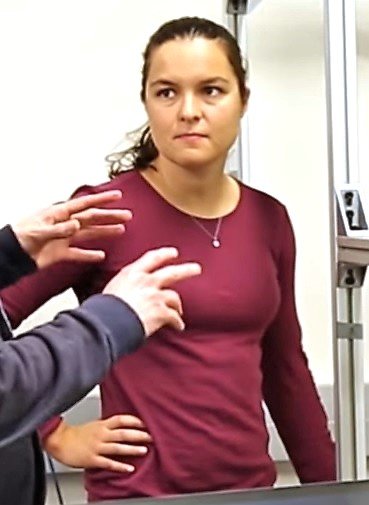
Chelsea Finn as a UC Berkeley PhD student in 2017, seven years before co-founding Physical Intelligence — a screenshot from a UC Berkeley video about the robot Vestri, not a Physical Intelligence photo, but representative of the academic robot-learning lineage the company's founders share.
Photo: UC Berkeley, CC BY 3.0, via Wikimedia Commons- 2024-03
Founded & seed
$70M seed, launches publicly
- 2024-10
π0 launches
First generalist robot policy
- 2025-02
Open-sources π0
Code and weights released
- 2025-04–11
π0.5, then π*0.6
Open-world generalization, RL
- 2026
π0.7 & $11B talks
Compositional generalization demoed
02Funding
Physical Intelligence's funding accelerated unusually fast. A $70 million seed round, led by Thrive Capital, closed and was announced alongside the company's public launch in March 2024, reportedly valuing the young company at around $400 million — a figure worth distinguishing from the separate $400 million Series A that followed eight months later, since the two are coincidentally the same number for very different things (a valuation versus a raise amount). That Series A closed in November 2024, backed by Jeff Bezos, Thrive Capital, Lux Capital, and the OpenAI Startup Fund, at a valuation reported as either $2 billion or $2.4 billion depending on the outlet. A $600 million Series B closed in November 2025, led by Alphabet's growth-investing arm CapitalG, valuing the company at $5.6 billion — meaning total funding through that round came to roughly $1.07 billion.
By late March 2026, Physical Intelligence was reported to be in talks for a further roughly $1 billion round that would value the company above $11 billion — more than double its Series B valuation in about four months, with Founders Fund confirmed as a participant. As of this writing, that round hadn't been confirmed as closed in any source reviewed; the company's actual, current valuation should be read as "reportedly in talks for over $11B," not a finalized figure.
Funding rounds by post-money valuation
Bloomberg / Crunchbase News, compiled through Nov 2025
Funding rounds
Seed
$70M led by Thrive Capital, announced alongside the company's public launch, reportedly at a ~$400M post-money valuation.
Series A
$400M from Jeff Bezos, Thrive Capital, Lux Capital, and the OpenAI Startup Fund, at a $2B-$2.4B valuation (reported figure varies by outlet).
Series B
$600M led by CapitalG (Alphabet's growth fund), at a $5.6B post-money valuation.
SourceBloomberg, Nov 2025
03The model line
Physical Intelligence doesn't build its own hardware. Its models are trained across other companies' robot platforms — UR5e arms, Trossen's bimanual arms, mobile manipulators, and the open ALOHA/DROID research platforms — and released as software. π0, the company's first generalist robot policy, launched October 31, 2024, demonstrating tasks like folding laundry and bussing tables across eight distinct robot configurations. Physical Intelligence open-sourced the base π0 model's code and weights in February 2025, alongside fine-tuned checkpoints for specific tasks — an unusual move for a company sitting on more than $1 billion in funding, and one that let outside teams (including Hugging Face, which built an independent PyTorch implementation) build on the work directly.
π0.5, released April 2025, extended the approach to open-world generalization with chain-of-thought planning, tested by mobile manipulators doing chores in three real homes the model had never seen during training. By November 2025, π*0.6 added reinforcement learning on top of demonstration data, and the most recent model as of this writing, π0.7 (April 2026), demonstrated what Physical Intelligence calls compositional generalization — Levine has described a version that learned to operate an air fryer from just two training examples by recombining previously learned skills, while also acknowledging its limits: "you can't tell it, 'Hey, go make me some toast'" without step-by-step guidance.
| Year | Event |
|---|---|
| 2024-02 | Delaware entity registered ahead of public launch |
| 2024-03 | Public launch with $70M seed round |
| 2024-10 | π0 launches, the company's first generalist policy |
| 2024-11 | $400M Series A at a $2-2.4B valuation |
| 2025-02 | π0 open-sourced |
| 2025-04 | π0.5 released |
| 2025-11 | $600M Series B at a $5.6B valuation; π*0.6 released |
| 2026-03 | Reported in talks for ~$1B at $11B+ valuation |
| 2026-04 | π0.7 released, demonstrating compositional generalization |
Physical Intelligence's official π0 demo video (November 2024) — the model discussed in section 03 below.
Physical Intelligence's official π0.5 demo video (April 2025), showing the mobile-manipulator policy generalizing to real homes it never saw during training.
Our newest model, π0.7, has some interesting emergent capabilities: it can control a new robot to fold shirts for which we had no shirt folding data, figure out how to use an appliance with language-based coaching, and perform a wide range of dexterous tasks all in one model! pic.twitter.com/s9NxKfb7pe
— Physical Intelligence (@physical_int) April 16, 2026
Physical Intelligence's own X post introducing π0.7 (April 2026) — the compositional-generalization capabilities discussed in section 03 below.
04No hardware, no customers, no revenue
Physical Intelligence has been unusually candid that it doesn't have a commercialization plan yet. COO Lachy Groom told TechCrunch in January 2026, "I don't give investors answers on commercialization. That's sort of a weird thing, that people tolerate that." The company has run pilot testing with unnamed partners in logistics, grocery, and — per the same profile — a chocolate manufacturer, but has disclosed no customer names, no revenue figures, and no product for sale. Headcount estimates vary sharply by source and date, from roughly 80 employees (TechCrunch, PitchBook) to more than 200 (Tracxn, Forbes) in reporting from the first half of 2026 — a spread wide enough that any single figure should be treated as approximate.
That research-first posture sits in explicit contrast with Physical Intelligence's most direct rival, Skild AI, which has emphasized commercial deployments and disclosed roughly $30 million in 2025 revenue. Press coverage routinely frames the two companies as taking opposite bets on the same underlying thesis — that a single foundation model can generalize across robot bodies — with Physical Intelligence betting research breadth will eventually convert into product, and Skild betting commercialization now builds the data and revenue to fund further research.
- No disclosed revenue and no announced product for sale as of mid-2026 — pilot testing only, with unnamed partners in logistics, grocery, and food manufacturing.
- Headcount estimates range from roughly 80 to over 200 depending on the source, a spread wide enough to treat any single figure as approximate.
- Direct rival Skild AI has taken the opposite approach, disclosing roughly $30M in 2025 revenue from commercial deployments.
05The OpenAI relationship
OpenAI's venture arm has invested in Physical Intelligence across both its Series A and, per some reporting, Series B rounds — while OpenAI itself has separately begun building its own embodied-AI and robotics-hardware division, expanding hiring into roles spanning actuator design, 3D-printing lab technicians, and data-acquisition engineering. That's a familiar pattern in this sector: OpenAI backed Figure AI's Series B in February 2024 before Figure ended their model-development partnership roughly a year later, with Figure's CEO saying outsourcing AI "doesn't work for real-world embodied robotics." No comparable break has been reported between OpenAI and Physical Intelligence as of this writing, but the structural tension — a major investor building a potentially competing product — is the same one that already played out with a different portfolio company.
06FAQ
Who founded Physical Intelligence, and when?
Seven co-founders — Karol Hausman, Sergey Levine, Chelsea Finn, Brian Ichter, Lachy Groom, Adnan Esmail, and Quan Vuong — founded the company in San Francisco in early 2024, publicly launching in March 2024 with a $70 million seed round.
Does Physical Intelligence build its own robots?
No. Physical Intelligence builds AI models — the π0 line — trained across other companies' robot hardware, including UR5e arms, Trossen's bimanual arms, and mobile manipulators. Its thesis is that intelligence, not hardware, is robotics' actual bottleneck.
How much has Physical Intelligence raised?
Confirmed rounds total roughly $1.07 billion through its November 2025 Series B ($70M seed + $400M Series A + $600M Series B), valuing the company at $5.6 billion. A further round of roughly $1 billion at an $11 billion-plus valuation was reported in talks as of March 2026, but no source confirms it has closed.
How does Physical Intelligence make money?
As of mid-2026, it doesn't have a disclosed revenue model. COO Lachy Groom has said publicly that the company doesn't give investors answers on commercialization. It runs pilot testing with unnamed partners but has no announced product for sale.
07Sources
01. Founding
03. The model line
04. No hardware, no customers, no revenue
05. The OpenAI relationship
Related articles
Physical Intelligence company profileSkild AI's own history — the direct rival taking the opposite betWhere Physical Intelligence fits on the physical AI landscape mapCompany Deep Dives
Unitree
Figure AI
1X Technologies
Physical Intelligence
- ›The History of Physical Intelligence(this article)
Skild AI
NVIDIA
- ›NVIDIA Isaac GR00T, Explained: What NVIDIA Actually Sells in Robotics
- ›NVIDIA DRIVE, Explained: The Automotive Platform Behind Mercedes-Benz, Uber, and a Dozen Other Automakers
- ›NVIDIA Jetson: The Decade-Old Hardware Lineage Behind Physical AI
- ›NVIDIA: A History of the GPU
- ›NVIDIA CUDA, Explained: The Software Behind NVIDIA's AI Moat
- ›Jensen Huang: From a Denny's Dishwasher to NVIDIA's CEO